Women’s Reservation Takes Centre Stage as India Debates the Future of Political Representation
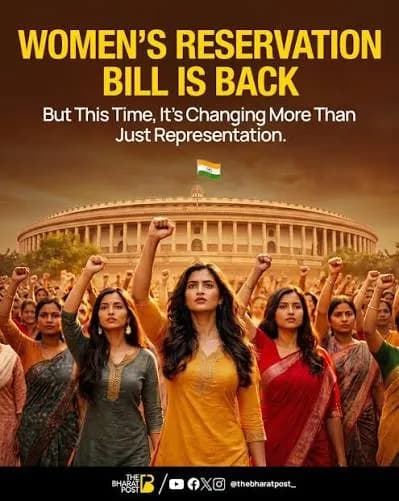
The question of women’s political representation is once again becoming an important issue in Indian national politics. Lok Sabha Speaker Om Birla recently highlighted the potential of the women's reservation law to create new opportunities for women in political leadership.
The discussion comes at a politically significant time, with parties already beginning to think about the 2029 Lok Sabha (opens in a new tab) election and the future structure of political representation in the country.
33% Reservation and Political Representation
The women's reservation law provides for 33% reservation for women in the Lok Sabha and state Legislative Assemblies. Its implementation is connected to the delimitation process, making the issue closely linked with the future composition of India's elected institutions.
The policy has the potential to significantly increase the number of women participating directly in national and state-level politics.
Supporters argue that greater representation could bring more attention to issues affecting women, families, healthcare, education and social development.
Parliament and the Political Debate
The question has also become part of the wider debate inside Parliament. An attempt to pass a constitutional amendment linking women's reservation with delimitation during the 2026 Budget Session did not secure the required two-thirds majority in the Lok Sabha.
The issue demonstrates how constitutional reforms can become part of a wider Political War (opens in a new tab) between the government and opposition.
While the government has emphasised the importance of increasing women's participation, opposition parties have raised questions about the timing, implementation process and delimitation.
What Could Change by 2029?